Questions in a world of new: beer tasting at Zero Degrees

zero-degrees-bristol-1
Bristol Zero Degrees at night. Credit: http://www.zerodegrees.co.uk.

To Zero Degrees in Bristol for a beer tasting, brewery tour and dinner. On its fifteenth anniversary, Zero Degrees is launching a new range of bottled beers, while it has also been working on refreshing its venues. I was with Andy Hamilton, author of Brewing Britain and co-founding editor of Alderman Lushington, an online drinks magazine we’re launching shortly. We were guests of the management as part of a press group. Continue reading

You must eat your boots first | Spelk

Marooned
Howard Pyle, Marooned. Credit: Wikimedia Commons.

My short story, published by Spelk | Short, sharp flash fiction

Some years ago during one of the dull seasons—our work was very much on the seasonal side—my Waterstones branch entered a Book Tokens company competition on ‘opening lines’. We had to identify the opening lines of various more-or-less famous novels. We also had to come up with an opening line of our own. For whatever reason, ‘I’d been prodding the Frenchman with my boot all day to see if he was dead’ was the egg that my subconscious laid and we used that. It bothered me a little, it itched, and I knew that I wanted to make a story from it some time. Much later, the story suddenly came to me in the shower; at that time most of my best ideas, such as they were, seemed to emerge under hot water. I used to covet a pen with ink that would hold to the watery tiles, but that could be wiped away later. Continue reading

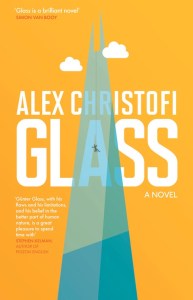
Glass by Alex Christofi

christofi-glassGlass by Alex Christofi. My review for Shiny New Books.

Alex Christofi’s debut novel is a mildly eccentric, likeable and interesting not-quite romp.

Read the full review at Shiny New Books


I have come to wonder whether I will make it through my twenty-third year. In the nine months since my mother died, I started a new job, which led me to meet a number of new people, one of whom I killed in a misunderstanding. But other things happened in the first twenty-two years that I should explain first.

First they came for the Irish

It was Finnegan's Wake (Guinness and the craic); then it was The Hill (gourmet pizza and imported lager); now it is ... this.
It was Finnegan’s Wake (Guinness and the craic); then it was The Hill (gourmet pizza and imported lager); now it is … this.

The tale of a pub

When I moved to Bristol in 2002 people still talked about Finnegan’s Wake on Cotham Hill. I would say that I’d had a drink and eaten a pizza at The Hill and Bristolians would nod and say ‘Ah, you were at Finnegan’s Wake.’ The Hill was new, you see. For years locals still called it Finnegan’s, with a sort of lazy obstinacy. It was odd, because no one had any affectionate memories of the old pub; it was a nondescript Irish theme bar, notable only for being named after Joyce’s vast unreadable novel. In fact, during my fifteen minutes’ research for this, no one I asked could recall anything about it: ‘I don’t remember, there were probably some Irish props scattered about the place and some old-fashioned signs and agricultural implements on the wall’. Continue reading

Ecstasy and efficiency

When everything about a people is for the time growing weak and ineffective, it begins to talk about efficiency. So it is that when a man’s body is a wreck he begins, for the first time, to talk about health.  Vigorous organisms talk not about their processes, but about their aims. There cannot be any better proof of the physical efficiency of a man than that he talks cheerfully of a journey to the end of the world. And there cannot be any better proof of the practical efficiency of a nation than that it talks constantly of a journey to the end of the world, a journey to the Judgment Day and the New Jerusalem.  There can be no stronger sign of a coarse material health than the tendency to run after high and wild ideals; it is in the first exuberance of infancy that we cry for the moon. None of the strong men in the strong ages would have understood what you meant by working for efficiency. Hildebrand would have said that he was working not for efficiency, but for the Catholic Church.  Danton would have said that he was working not for efficiency, but for liberty, equality, and fraternity.  Even if the ideal of such men were simply the ideal of kicking a man downstairs, they thought of the end like men, not of the process like paralytics. They did not say, “Efficiently elevating my right leg, using, you will notice, the muscles of the thigh and calf, which are in excellent order, I—” Their feeling was quite different. They were so filled with the beautiful vision of the man lying flat at the foot of the staircase that in that ecstasy the rest followed in a flash.

G K Chesterton 1905 Heretics
Dread words from the advertising lexicon

spa-pampering
Someone being pampered. It could only be worse if it were by candlelight in an indoor spa. Credit: Wikimedia Commons.

My dislike of the word ‘pamper’ suddenly caught fire recently. Walking through an English seaside town, I saw sign after sign advertising ‘pamper packages’ of some sort. There was competition to see who could offer the most ludicrously overblown one; fourteen hours of pampering and spa treatments by candlelight as you’re fed Turkish Delight by captive apes wearing golden chains, each trained to whisper because you’re worth it and smile sympathetically, their grave simian eyes showing that they understand and value you—they don’t judge. Continue reading

There’s nowt so hard as fops

spectators-print-shop
© Trustees of the British Museum. (This version cropped.)

We tend to think of fops as weak, coddled, over-groomed, and lacking in mettle. A man wearing make-up, a powdered wig and silks, speaking with an affected drawl and striking artful poses; a woman with towering hair and a lapdog, fanning herself with infinite boredom and leisure. The 18th-century gentry must have been be soft, lacking in grit, surely? Continue reading

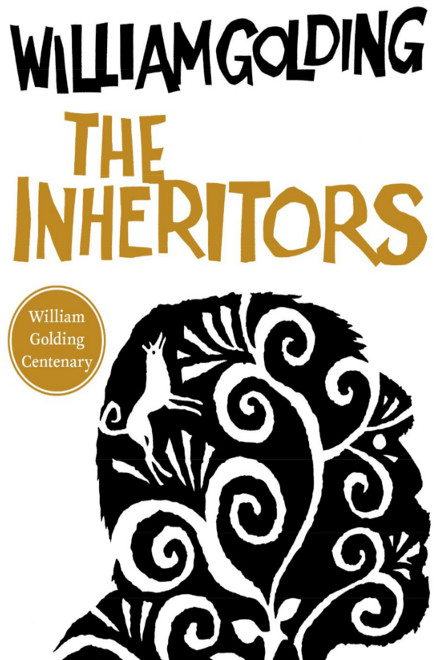
The Inheritors by William Golding

Golding-InheritorsThe Inheritors by William Golding. A chewy but fascinating and impressive prehistorical novel by the author of Lord of the Flies. Golding himself thought it his best. This review first appeared in Nudge Books (now NB). Continue reading